Caledonia Cremation – Challenge Poverty Week 2026
Posted: 08 October 2026, in News
Caledonia Cremation is a funeral directors which doesn’t profit from your loss. It provides affordable, caring, dignified direct cremations across mainland Scotland. Direct cremation isn’t for everyone, but for some people it is their preference; there is no service at the crematorium but families can then remember the person they’ve lost in the way and at the time that feels right to them. Most importantly though we are the only social enterprise funeral director and all our profits go back into supporting bereaved people in hardship and campaigning against funeral poverty.
We spoke with John Halliday, Chair and co-founder to find out how they are working to prevent and address funeral poverty.
How does your organisation support those experiencing poverty in the community?
We offer a direct cremation to anyone in Scotland, no deposit required and costing £1,395. Most people using our service are just looking for an ethical and professional funeral director with excellent reviews. But we do more. Bereavement is the worst part of most people’s lives, but it so much worse for those who are also unable to pay for the price of a funeral. So many families sell possessions or take on debt as the national average funeral is around £5,000. One of our proudest moments was a report that found our presence in the market holding down average prices nationally. We support people who can’t pay for a funeral: subsidising their funeral or securing them benefits or offering advice. We provide workshops and peer-support. Our biggest impact is possibly simply that we don’t require a deposit, we hear stories of private funeral directors turning away families when they learn the family are claiming Universal Credit.
What challenges do you face to your work around tackling poverty?
There is perhaps a reason that there are not lots of not-for-profit funeral providers, it is a big market with long-established business who are often keen on traditional approaches. There are also lots of national companies who can afford to spend millions on advertising. So we can feel like minnows sometimes with around 100 funerals per year.
We need small grants each year to help subsidise the funerals of people who can’t pay and are ineligible for benefits (e.g. students or working poor), but grant givers find it hard to support a trading business rather than a charity project.
Do you have a short testimonial to share?
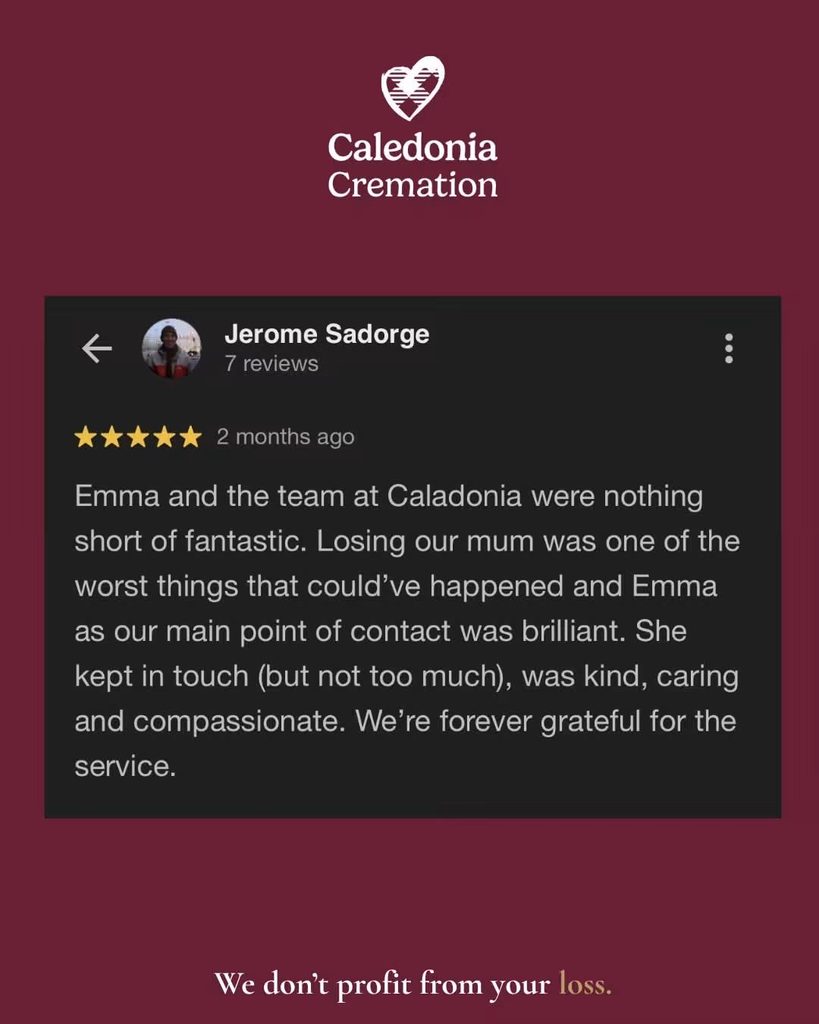
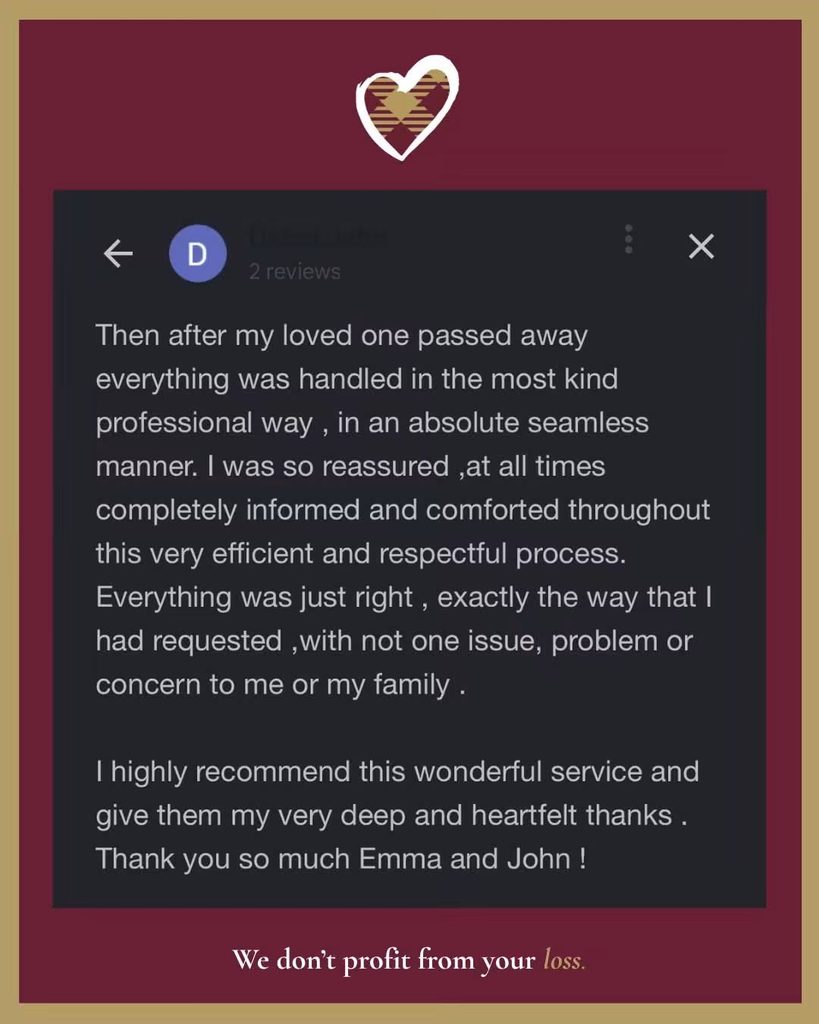
“After contacting eight other cremation services, which all seemed anonymous and could not always answer our questions, we finally found Caledonia Cremation. We were immediately delighted by the compassion and knowledge. They gave us confidence in their service for our terminally ill father. From beginning to end, they provided seamless communication support through regular phone calls, emails and texts. This gave us great relief and reduced our personal distress. The whole process was seamless. They were empathetic and even offered that we could call them anytime we needed to. This is an individual and personal five-star service.”
What one change would most help you support those dealing with poverty?
I would reform Funeral Support Payment to include more working people, poorer pensioners and orphaned students. It also needs to be raised to reflect the real cost of a dignified funeral after falling so far behind over the last four decades. A bereaved family in poverty should not be taking on debt to give someone they love a decent farewell.
We also need a system in which trading social enterprises or complex interventions don’t experience additional hurdles for grants compared to less complex charity projects; it is already so much harder to set up and run a social enterprise than a private business, it deserves to be better supported financially as part of a more sustainable and ethical future economy.