Ecosystems Leadership Exchange 2026: Seoul, South Korea
Posted: 03 November 2026, in News
Scotland is often placed on the podium when it comes to support for social enterprises. But we can only stay there if we continue to improve the sector, support each other by shaping government policy and learn from international examples. The latter is exactly what the Ecosystems Leadership Exchange (ELE) is about.
The first ELE from the Social Enterprise World Forum (SEWF) took place last month in Seoul, South Korea. I was in the incredibly fortunate position of being seconded by SEWF and attending the weeklong exchange. We were joined by international colleagues, civil servants from multiple governments and ministers from Scotland and Malaysia. The purpose of the exchange was to learn from one another, but crucially to learn from what is happening in South Korea.
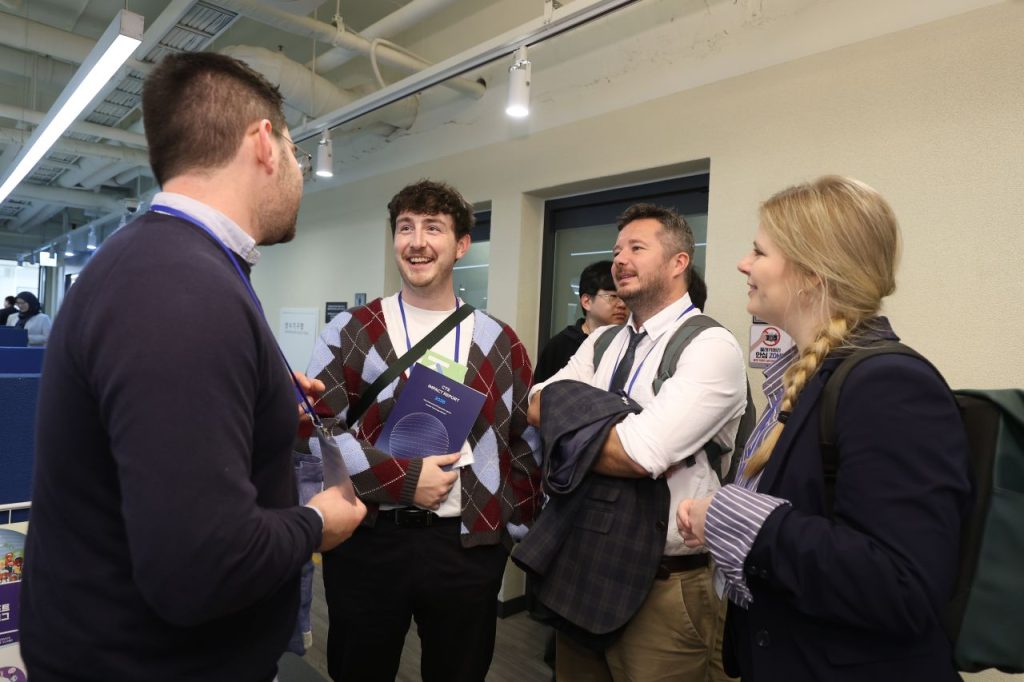
South Korea’s ecosystem has historic ties to its pre-colonised past, where we were informed by multiple speakers that Japan outlawed the use of social enterprise and cooperatives. But the ecosystem more recently grew from the financial crash that happened across Asia in 1997, which led to a revaluation of the impact that businesses have in South Korea. This began an increase in social corporate responsibility schemes, which now have a strong tradition in the Republic, and many of the organisations that we visited had benefited from it.
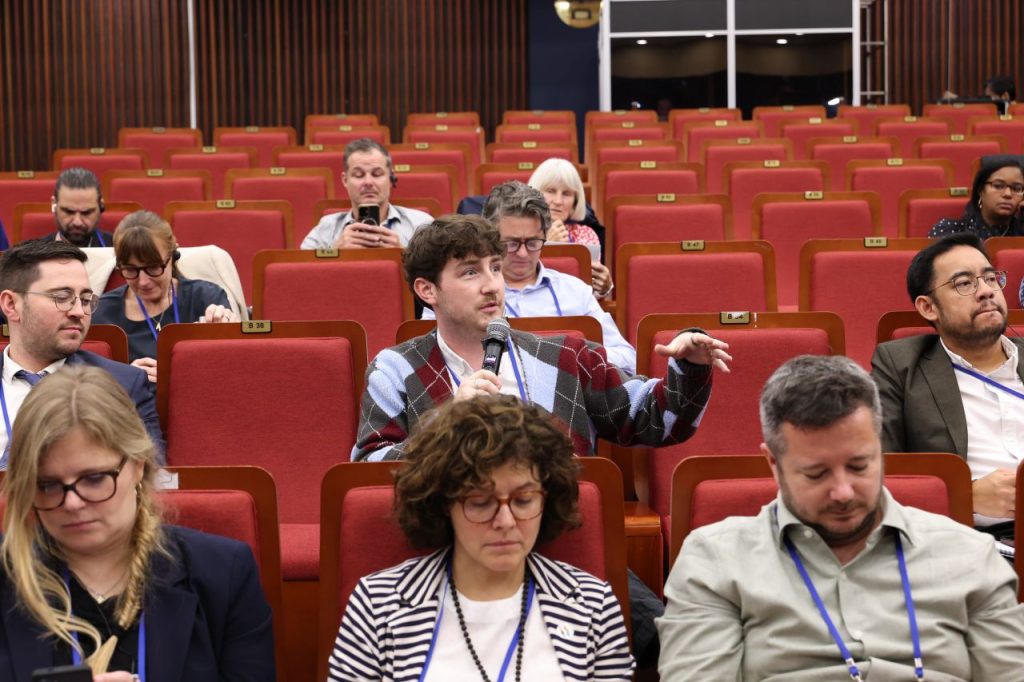
This was the context we were informed of by the chairman of the SK Group, Chey Tae-won, in our first venue, the library of the Centre for Social Value Enhancement Studies (CSES). The library hosted shelves full of publications from PhD students on social value that came from the centre. We then heard from Gayoung Imm on CSES’s Social Progress Credits (SPC) – a calculation of how to measure social value. The concept is that organisations are financially rewarded for their positive impact. There were then further panel discussions, during which the floor was not quiet. Many questions were asked and answered about the SPC and how it has been implemented in the Republic.
When it comes to international learning, I always think it is best to see it in person, and that is what the rest of the week consisted of. Different site visits with demonstrations of how tech-forward the economy of Korea is, and the impact organisations are having. One invention that stuck with me was the DotPad – a digital tablet for the blind. It creates raised dots for reading in Braille and can connect to other devices to render images for the blind to see in real time. Quite an impressive bit of kit.
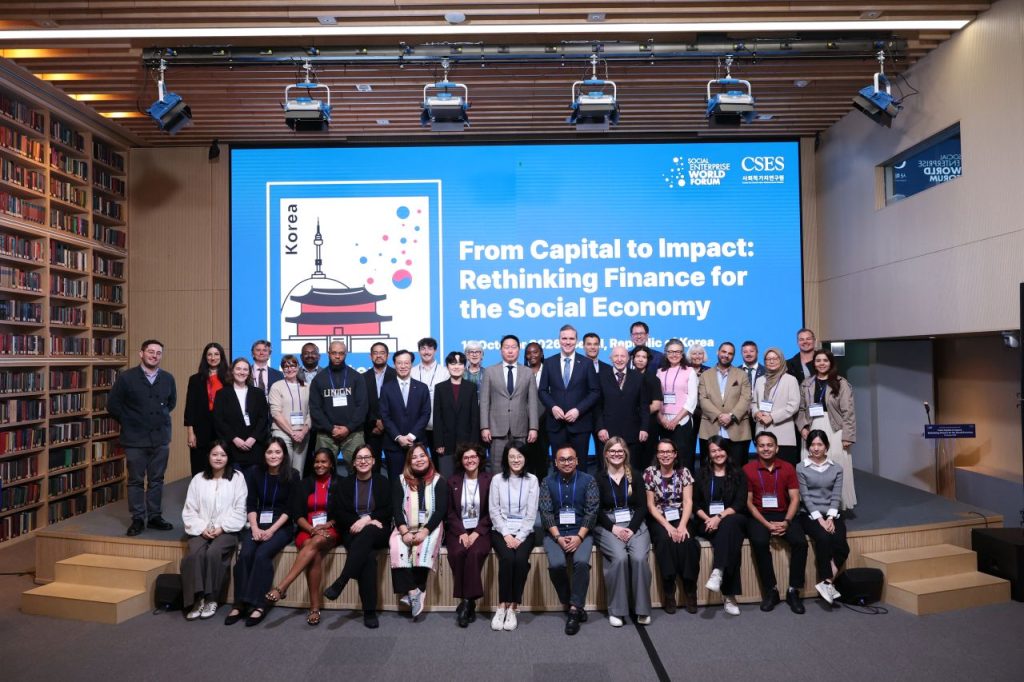
Yet, from a policy perspective, my favourite day was spent entirely at the Republic of Korea’s National Assembly. As a self-described lover of policy, I thought it was a fascinating day, discussing ROK’s recent Framework Act on Social and Solidarity Economy. Scottish Minister Tom Arthur spoke about our own Community Wealth Building Act and the similarities between the two countries, and importantly announced that Scotland will be hosting the next Ecosystem Leadership Exchange in 2028. I think this will give the opportunity for Scotland’s social enterprises to speak to the world, explain the massive impact they are having, explore what has been working and what we are still to learn from other countries.
At the Assembly, we also heard from local government leaders, specifically mayors. The buy-in that these policymakers had to the social economy was clear. There were multiple examples of local governments embracing the social economy to solve the issues of rural depopulation and poverty in their local communities, something all too familiar for Scotland. One example was the promotion and support for a community-owned solar cooperative that local people could buy into and use the energy created, either in their homes or sell it back to the grid and use the money for community projects.
This local support from government is, I believe, vital to supporting the social economy and social enterprises across Scotland. From the grassroots to local policy spaces to then national spaces is the connection necessary to create a wellbeing economy that we are all striving for. Is it possible for this interconnection to materialise at all?
On the last day of the exchange, my question was answered: yes. ROK’s government has created a distinct plan and map to ensure their social economy cuts across the relevant government portfolios. There is no space for siloed working; there must be collaboration across ministries. This forward thinking and awareness to look back at how government works, ensuring the right connections are made, was impressive to see. I wasn’t the only one taken by this; Scottish Minister Tom Arthur spoke of the impact it has had on him. I am optimistic that this approach will be taken up by the Scottish Government as we go through the plans for Community Wealth Building.
I think often it is travelling and seeing international examples that allows the opportunity to think and approach problems back home from a different angle. When I was speaking with international colleagues, they were often jealous of the support social enterprises receive in Scotland. My ambition for Scotland would be to ensure that feeling changes to allow us to share what works and learn from what does not. But crucially, that support must be truly felt in every part of the country.
The exchange encouraged all attendees to commit to an action to take home; I offered to update SEWF and those attending on what is happening with Community Wealth Building. But I also hope we can build on these relationships and create new opportunities for international cooperation. I look forward to doing what I can to host any returning or new attendees for 2028.
Andy Paterson, Policy Officer.